
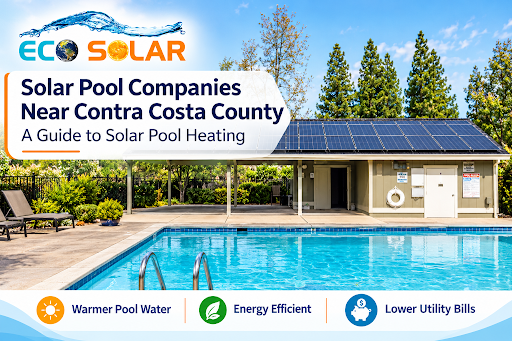
If you are looking for solar pool companies near Contra Costa County, choosing the right solar pool heating system can help you enjoy your swimming pool for more months of the year. Solar pool heating uses energy from the sun to warm your pool water, offering a practical way to make swimming more comfortable while reducing the need for conventional pool heating.
For homeowners in Contra Costa County, solar pool heating can be a useful option because sunny weather provides opportunities to collect solar energy. However, the right system depends on your pool size, roof space, sunlight exposure, and swimming habits. Understanding these factors can help you make an informed decision before investing in a new system.
At Eco Solar Energy, homeowners can explore solar energy solutions that support more efficient energy use. Whether you are planning a new installation or considering an upgrade to your existing pool, learning about system options, installation requirements, and ongoing maintenance is a good place to start.
Why Consider Solar Pool Heating in Contra Costa County?
A swimming pool can be a great place to relax, exercise, and spend time with family. However, cooler mornings and evenings can make pool water uncomfortable, even during warmer months. Solar pool heating offers a way to raise the water temperature using energy collected from sunlight.
Unlike conventional pool heaters that rely on gas or electricity to generate heat, a typical solar pool heating system uses solar collectors to capture heat and transfer it to the water circulating through the system.
Here are some reasons homeowners consider solar pool heating:
- Lower heating energy use: Solar energy can reduce the amount of gas or electricity needed to heat pool water.
- More comfortable swimming: A properly designed system can help extend the swimming season.
- Use of renewable energy: Solar pool heating takes advantage of sunlight rather than relying entirely on conventional energy sources.
- Potential long-term savings: Reduced use of conventional heating equipment may lower ongoing energy expenses.
- Simple operating principle: Many systems use your existing pool pump to circulate water through solar collectors.
The actual benefits depend on the system design, local weather, pool temperature goals, and how often you swim.
How Does a Solar Pool Heating System Work?
Before contacting solar pool heating companies near Contra Costa County, it helps to understand how the equipment works.
Most solar pool heating systems include solar collectors, connecting pipes, a circulation system, and controls that manage water flow. The collectors are commonly installed on a suitable roof or another area that receives sufficient sunlight.
Here is the basic process:
- Pool water circulates: Your pool pump moves water through the plumbing system.
- Water enters the solar collectors: The water flows through collectors that absorb heat from sunlight.
- The water warms up: Heat transfers from the collectors to the pool water as it passes through them.
- Warm water returns to the pool: The heated water flows back into the swimming pool.
- The process repeats: Circulation continues when the system can collect useful heat.
Some systems use automatic controls to direct water through the solar collectors when conditions are suitable. This helps manage heating performance without requiring constant manual adjustments.
Solar pool heating is different from solar photovoltaic panels. Photovoltaic panels generate electricity, while solar pool collectors capture heat directly for warming water. Understanding this difference helps you select equipment designed for your specific needs.
Choosing Solar Pool Heater Installation in Contra Costa County
Finding the right provider is an important step toward getting reliable results. When comparing options for solar pool heater installation Contra Costa County, consider the installation team’s experience, the proposed system design, and the suitability of your property.
A professional assessment should consider several important factors.
Pool Size and Heating Requirements
The size of your swimming pool affects how much solar collector area may be needed. A larger pool generally requires more collector capacity than a smaller one. Your preferred water temperature and swimming schedule also influence the system design.
Ask the installer to explain how the recommended collector size relates to your pool’s dimensions and heating goals.
Roof Space and Sunlight Exposure
Solar collectors need adequate exposure to sunlight to perform effectively. Roof orientation, shading from trees, nearby buildings, and available installation space can affect how much heat the system collects.
If your roof is unsuitable, an installer may assess whether another sunny location on your property is practical.
Existing Pool Equipment
Your current pump, filter, plumbing, and controls may affect installation requirements. A qualified contractor should inspect the existing equipment and determine whether any changes are necessary.
This assessment can help avoid compatibility problems and clarify the expected scope of work before installation begins.
System Quality and Warranty
Ask about the collectors, valves, controls, pipework, and other components included in the proposal. You should also understand the product warranty, workmanship coverage, and maintenance requirements.
A clear written estimate makes it easier to compare installation options and understand what is included.
What to Expect From Solar Pool Heater Installation Near Contra Costa County
The process for solar pool heater installation near Contra Costa County usually begins with a property assessment and a discussion about your heating goals.
A professional installer will review your pool, available sunlight, roof or ground space, and existing equipment. Based on these details, the installer can recommend a suitable system and explain the expected installation work.
The typical process includes the following stages:
- Initial consultation: Discuss your pool size, preferred swimming season, and heating expectations.
- Site assessment: Review roof conditions, sunlight exposure, plumbing, and equipment compatibility.
- System planning: Determine the collector area, pipe routing, controls, and installation requirements.
- Installation: Mount the collectors, connect the plumbing, and integrate the system with the pool circulation equipment.
- Testing and setup: Check water flow, connections, controls, and system operation.
- Customer guidance: Learn how to operate the system, monitor performance, and arrange routine maintenance.
Installation time varies depending on the property’s layout, equipment requirements, and project complexity. Your installer should explain the expected timeline before work begins.
How to Compare Solar Pool Heating Companies Near Contra Costa County
Not every property has the same heating requirements. Comparing solar pool heating companies near Contra Costa County can help you find a provider that understands your needs and offers a suitable solution.
Consider these questions when evaluating a company:
- Does the company assess the pool and property before recommending a system?
- Can the installer explain the expected heating performance and its limitations?
- Is the estimate detailed and provided in writing?
- Does the proposal identify the equipment, installation work, and any additional requirements?
- What product and workmanship warranties are available?
- Does the company provide maintenance guidance or service support?
- Can the installer explain how the system will work with your current pool equipment?
It is also helpful to ask whether permits or other approvals may be required for your specific installation. Requirements can depend on the property and the work being performed.
A dependable provider should explain the benefits and limitations of solar pool heating clearly rather than promise a particular water temperature in every season.
Working With Solar Pool Heating Contractors Near Contra Costa County
Experienced solar pool heating contractors near Contra Costa County can help you determine whether your property is suitable for a solar heating system and what equipment may be needed.
Before choosing a contractor, make sure the proposed design matches your pool and local conditions. For example, a pool that receives regular shade may need a different approach from one with a large, sunny roof nearby.
Discuss how the system is expected to perform during cooler weather, cloudy periods, and different parts of the swimming season. Solar heating depends on available sunlight, so performance will naturally vary.
You should also ask about pool covers. A suitable pool cover can reduce heat loss and evaporation, helping the pool retain warmth for longer. Combining a cover with solar heating may improve the overall effectiveness of your pool heating setup.
Finally, request clear instructions for seasonal operation, including when to run the circulation system and how to protect the equipment if freezing conditions are possible.
Planning Solar Pool Installation in Contra Costa County
If you are building a new pool or upgrading an existing one, planning solar pool installation Contra Costa County homeowners can benefit from starts with understanding the property’s layout and long-term needs.
For a new pool, consider solar heating early in the design process. Planning ahead may make it easier to coordinate the plumbing, equipment location, roof access, and collector placement.
For an existing pool, an installer can review the current circulation system and determine how solar collectors could be integrated. The condition of your pump and plumbing may influence the final installation plan.
Before moving forward, consider these practical steps:
- Define your preferred swimming season and water temperature.
- Check which parts of your property receive the most sunlight.
- Ask for a professional assessment of your pool and equipment.
- Compare written proposals and warranty terms.
- Consider using a pool cover to reduce heat loss.
- Review expected maintenance needs and operating requirements.
Solar pool heating does not guarantee a specific temperature throughout the year. However, a properly sized and installed system can help make better use of available sunlight and reduce reliance on conventional pool heating.
Why Explore Solar Pool Heating With Eco Solar Energy?
Choosing a solar energy solution starts with understanding your property’s needs and the results you want to achieve. Eco Solar Energy provides a starting point for homeowners who want to explore solar options and learn more about using renewable energy.
When considering a pool heating project, focus on practical factors such as system suitability, sunlight exposure, installation quality, and long-term operating needs. These details are important for making a decision that fits your property.
Visit the Eco Solar Energy website to learn more about its services and discuss which solar solutions may be suitable for your project. Before scheduling an installation, confirm the company’s current service area and whether it offers dedicated solar pool heating services in Contra Costa County.
If you are comparing solar pool companies near Contra Costa County, take time to ask questions, understand the proposed system, and review the installation details. A well-planned approach can help you make a more informed choice for your pool and your home.
Frequently Asked Questions
1. How do I choose the best solar pool companies near Contra Costa County?
Choose a company that evaluates your pool size, roof space, sunlight exposure, and existing equipment before recommending a solar heating system. Check its installation experience, warranties, customer reviews, and maintenance support.
– What should I ask a solar pool heating company before hiring it?
Ask about system suitability, installation requirements, expected heating performance, warranty coverage, and after-installation support.
– Why is a property assessment important before installation?
It helps determine whether your property has suitable sunlight, collector space, and compatible pool equipment.
– Can solar pool heating companies install systems for existing pools?
Yes, many solar pool heating systems can be added to existing pools after checking the plumbing, pump, and available collector space.
2. What should I know about solar pool heater installation in Contra Costa County?
Solar pool heater installation involves placing solar collectors in a sunny location and connecting them to your pool’s circulation system. Proper planning helps ensure the system suits your pool and heating needs.
– How does solar pool heater installation near Contra Costa County work?
The installer assesses the property, designs the system, connects the collectors to the pool plumbing, and tests the equipment.
– Does my existing pool pump work with a solar pool heater?
It may. An installer should check your pump’s capacity, plumbing layout, and system requirements to confirm compatibility.
– Where are solar pool heating collectors installed?
They are commonly installed on suitable roofs or other sunny areas with enough space and appropriate structural support.
3. How does a solar pool heating system work?
A solar pool heating system circulates pool water through collectors that absorb sunlight and transfer the captured heat to the water before returning it to the pool.
– What is the difference between solar pool heating and solar panels?
Solar pool collectors capture heat directly, while photovoltaic solar panels convert sunlight into electricity.
– Does a solar pool heater need electricity to operate?
Many systems use the pool’s existing electric pump to circulate water. Some also use automatic controls to manage water flow.
– Can solar pool heating work during cloudy weather?
Yes, collectors may still capture some heat, but performance generally decreases when sunlight is limited.
4. Can solar pool heating extend the swimming season?
Yes, a properly designed solar pool heating system can help keep pool water comfortable for longer. Results depend on sunlight, outdoor temperatures, pool exposure, and the temperature you prefer.
– Does solar pool heating work during cooler months?
It can collect heat during cooler months when sufficient sunlight is available, but heating performance may be lower.
– How can I keep my pool warm overnight?
Use a suitable pool cover to reduce heat loss and evaporation while the pool is not in use.
– Does pool size affect solar heating performance?
Yes, larger pools generally need more collector capacity because they contain more water to heat and may lose more heat from their surface.
5. How do I compare solar pool heating companies near Contra Costa County?
Compare providers based on their installation experience, system design, equipment quality, warranties, and customer support. Request a property assessment so recommendations reflect your pool’s actual requirements.
– What qualifications should solar pool heating contractors near Contra Costa County have?
Look for relevant installation experience, appropriate licensing for the work, insurance, and familiarity with local requirements.
– Why should I check the installation warranty?
It helps clarify what protection is available for workmanship and equipment if a covered issue occurs.
– Should I compare multiple installation proposals?
Yes, comparing proposals helps you understand differences in equipment, installation scope, warranties, and ongoing service.
6. Does a solar pool heater require regular maintenance?
Yes, regular inspections help identify problems with pipes, valves, collectors, and controls. Follow the manufacturer’s maintenance instructions to keep the system operating properly.
– How can I improve my solar pool heater’s performance?
Keep collectors free from avoidable shading, follow the recommended circulation settings, and use a pool cover to help retain warmth.
– How should I prepare my solar pool heater for cold weather?
Follow the manufacturer’s instructions and ask your installer how to protect the collectors and plumbing from freezing conditions.
– What are the signs that a solar pool heating system needs inspection?
Reduced heating performance, leaks, unusual water flow, or control problems may indicate that the system needs professional attention.
7. Is solar pool installation in Contra Costa County suitable for every home?
Not every property is equally suitable. Solar pool heating works best when there is enough unshaded space for collectors and the pool equipment can support the system.
– Can solar pool collectors be installed if my roof receives shade?
Shading can reduce performance. An installer can assess other suitable locations that receive better sunlight.
– Can solar pool heating be added when building a new swimming pool?
Yes, planning the system during pool construction can make it easier to coordinate plumbing, equipment placement, and collector installation.
– What should I check before installing a solar pool heater?
Review sunlight exposure, roof suitability, pool size, circulation equipment, and any applicable installation requirements.
8. How can a pool cover improve solar pool heating?
A pool cover helps reduce evaporation and heat loss, allowing the water to retain more of the warmth collected during the day. It can complement a solar pool heating system.
– Should I cover my pool when it is not in use?
Using a suitable cover when the pool is not in use can help preserve warmth and reduce evaporation.
– Does a pool cover replace a solar pool heater?
No. A cover helps retain existing heat, while a solar pool heating system actively collects heat from sunlight and transfers it to the water.
– Can a pool cover help on cloudy days?
Yes, it can reduce heat loss even when solar collectors receive limited sunlight, helping the pool retain more of its existing warmth.