
High-Efficiency Pool Filtration Design
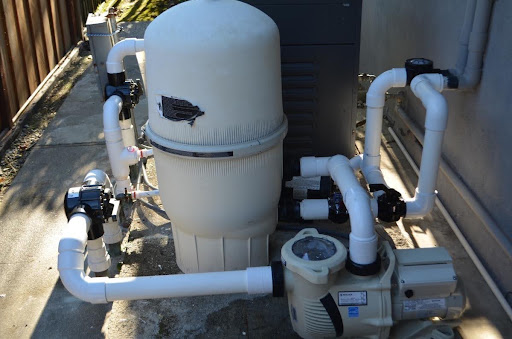
High-Efficiency Pool Filtration Design | Eco Solar Energy
Serving Contra Costa County Homeowners with Engineering-Driven Pool System Design
Advanced Filtration & Hydraulic System Design That Lowers Pressure, Cuts Electricity Use, and Protects Your Pool for the Long Run
A pool filtration system is often the most overlooked part of a backyard — until it’s straining your pump, driving up your electric bill, or wearing out equipment years before it should. At Eco Solar, we look at your pool filtration the way an engineer does: Determine where we can make improvements in hydraulic efficiency and then determine which of those improvements are the most cost effective.
Why Standard Filtration Systems Waste Energy
Most pool filtration problems don’t come from a bad filter — they come from a system that was never properly sized in the first place. Undersized piping, oversized pumps, and mismatched flow rates force water through the system at higher pressure than necessary, and every extra pound of pressure translates directly into extra electricity consumed month after month. Eco Solar has spent years finding the highest efficiency new products that have come to the pool industry and then sharing that equipment with homeowners and swimming pool HOA managers.
Engineered for Lower Pressure, Not Just Cleaner Water
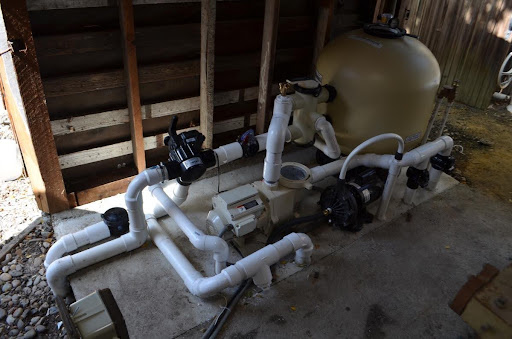
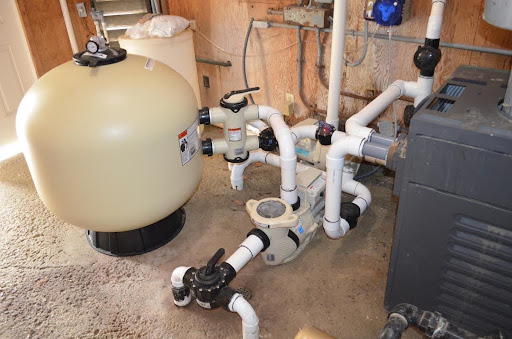
Our own pool system runs at 0 PSI with a clean filter, and hundreds of the systems we’ve designed for clients operate at less than 5 PSI — many between 0–3 PSI. That’s not a coincidence; it’s the result of deliberate hydraulic engineering and proper equipment selection. Lower operating pressure means less friction throughout the entire system, which directly reduces the electrical load your pump has to work against, day after day, season after season.
What a High-Efficiency Filtration Design Includes
A properly engineered filtration system is built as a complete package, not a single purchase decision. Our design process brings together every element that affects how hard your pump has to work and how much energy your pool consumes:
- Custom pipe sizing — When it makes economic sense. We have rebuilt hundreds of residential pool rooms upgrading to 2.5” pipe and fittings
- Optimized flow rates — Calculated to keep water moving efficiently and always with a Flow Vis flow-meter
- Right-sized filtration equipment — Picking high efficiency filters from the manufacturer’s performance curves, not replacing what was there already
- Reduced operating pressure — Engineered from the ground up to minimize strain on pumps, valves, and filters. And many times from below ground up where necessary
- Integration with solar pool heating — Filtration and solar heating systems work together nicely.
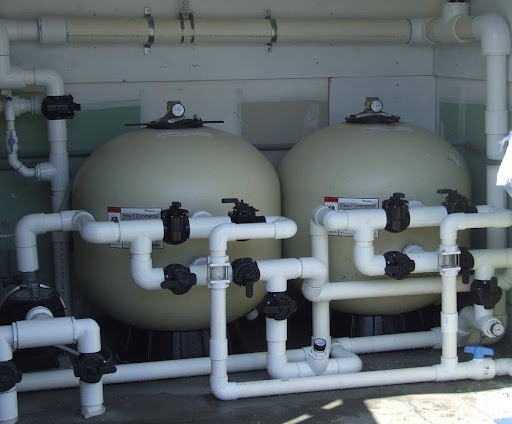
The Long-Term Payoff: Efficiency, Reliability, and Equipment Life
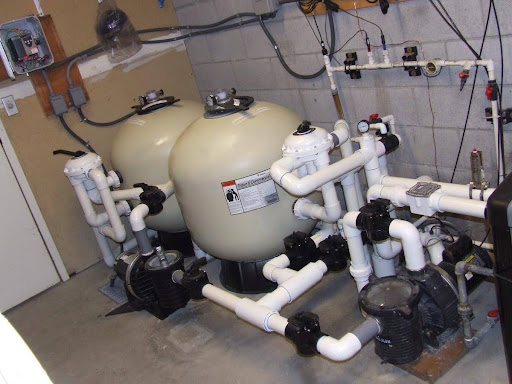
When a filtration system operates at lower pressure, the benefits extend well beyond your monthly electric bill. Pumps run cooler and with less mechanical stress. Filters clean more effectively without fighting excess resistance. Valves and seals experience less wear over time. The result is a pool system that doesn’t just perform better today — it stays reliable for years longer than a system built on guesswork and oversized equipment.
Built on Decades of Hands-On Engineering Experience
With over 40 years of experience and licensing that includes C-61/D-35 Pool and Spa Maintenance, Certified Aquatic Equipment Installer credentials, and California Solar Initiative Contractor status, Eco Solar has spent a career focused on getting pool hydraulics right the first time. This isn’t a side offering — advanced filtration and hydraulic design is central to how every pool system we touch is engineered, from new installations to upgrades of existing equipment.
Considering Solar Electricity or Battery Storage Too?
If you’re also exploring solar panels, home battery storage, or broader energy independence for your property, that side of the journey is handled through Powur. As a Powur Independent Consultant, Eco Solar can help design your entire system from the right number of panels and their correct placement to how many batteries would suit your home and family best.
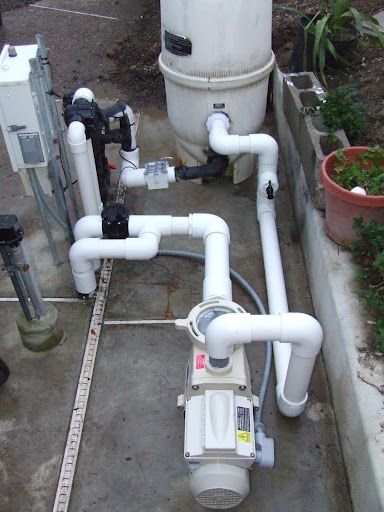
Frequently Asked Questions
How does high-efficiency pool filtration design reduce electricity use?
Electricity use in a pool system is driven largely by how much resistance the pump has to overcome. When pipe sizing, flow rate, and filter capacity are engineered together to lower operating pressure, the pump doesn’t have to work as hard to circulate the same volume of water, which reduces the electrical load over time.
- Does a bigger pump always mean better filtration?
Almost always, no. Most pool owners have switched to a variable speed pool pump which is many times more efficient than a single speed pump.
- What’s a typical operating pressure for a well-designed system?
Well-engineered systems commonly run at less than 5 PSI, with many operating between 0–3 PSI, compared to standard systems that often run between 10 PSI and 30 PSI.
- What’s a typical operating pressure for a well-designed system?
- Can an existing pool’s filtration system be redesigned for efficiency?
Yes. Many efficiency gains come from upgrading pipe sizing, choosing an efficient filter by using science, installing new greatly improved valving and certainly installing a variable speed pump that has a high WEF (Weighted Energy Factor). The higher the WEF, the more efficient the pump is.
What's the difference between filter selection and full hydraulic system design?
Choosing a filter alone only addresses one component, while system design that looks at hydraulics for efficiency will always yield a better system that is far less expensive to operate. Eco Solar’s approach engineers all of these elements together.
Why does pipe sizing matter as much as the filter itself?
Undersized piping creates resistance no matter how good the filter is, forcing the pump to push water harder and increasing pressure throughout the system.
- Is pipe sizing something homeowners typically think to check?
Rarely. It’s one of the most overlooked factors in pool efficiency, which is why hydraulic issues often persist even after a filter has been replaced. One of California’s largest pool builders, last century, was notorious for installing 1.25” copper piping on all pump influent and effluent piping. The rules of friction of water haven’t changed at all in the last 500 years. They were saving money on every job using ignorance as justification.
- Does flow rate affect water clarity as well as energy use?
Yes. Lower flow rates allow most pool filters to trap suspended water debris more efficiently, lowering energy consumption at the same time.
How does lower operating pressure extend equipment lifespan?
Lower pressure reduces the mechanical strain placed on pumps, valves, seals, and filters, so each component experiences less wear during normal operation. Over time, this translates into fewer breakdowns and a longer usable life for the entire filtration system.
- Which components benefit most from reduced pressure?
Pumps and valves tend to see the most noticeable benefit, since they’re directly exposed to the force of water moving through the system.
- Does this mean less frequent maintenance is needed?
Systems operating at lower pressure generally experience less wear-related maintenance, though routine filter cleaning and seasonal checks are still recommended.
- Does this mean less frequent maintenance is needed?
- Can high pressure cause damage even if a system still ‘works’ day to day?
Yes. Excess pressure often causes gradual wear that isn’t obvious until a component fails, even though the system may appear to function normally in the short term. And in all pool filters, pressures of 30 PSI and above can become dangerous because air can compress and become explosive at those pressures and above.
Does Eco Solar also handle solar electricity and battery storage for the home?
Eco Solar’s direct expertise is centered on solar pool systems and high-efficiency filtration design. For solar electricity and battery storage systems, Eco Solar operates as a Powur Independent Consultant and connects homeowners with a Powur Independent Consultant who handles that consultation.
- Who do I talk to about home solar panels or battery backup?
Eco Solar’s owner, Doug Rotermund, handles those conversations directly.
- Can pool filtration design and home solar/battery planning happen together?
Yes. Since Eco Solar works with the Powur network, pool system design and a Powur Independent Consultant’s solar electricity consultation can be coordinated.
- Can pool filtration design and home solar/battery planning happen together?